


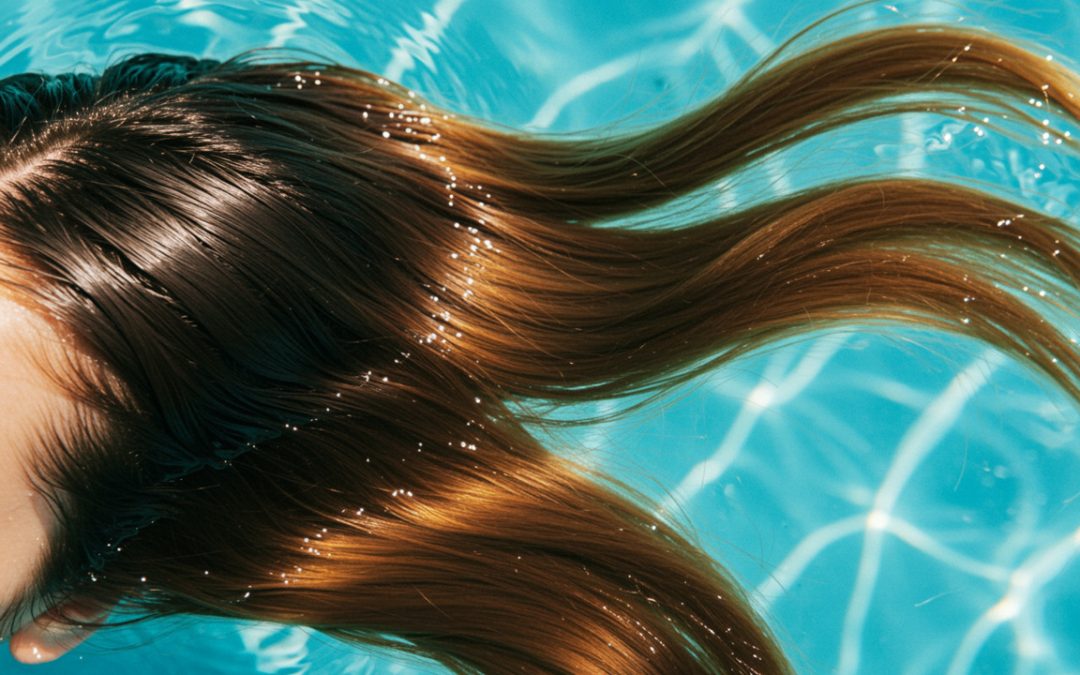
Taking a dip in the pool is the perfect way to cool down in Singapore’s endless summer, but if you are swimming frequently, your hair is likely paying the price. Chlorine and pool chemicals are designed to break down bacteria, but they do not differentiate between pool grime and the natural, protective sebum on your scalp. Over time, regular exposure strips the hair cuticle, leading to brittle texture, itchy skin, and even a notorious greenish tint caused by oxidized copper in the water [2]. If your hair feels like straw no matter how much conditioner you use at home, it is time for a professional intervention. By utilizing targeted detoxifying services and intense hydration, you can repair the damage and safeguard your hair for your next swim.
1. The Deep-Cleansing Clarifying Detox
The Transformation: Ideal for frequent swimmers whose hair feels coated, heavy, or displays a dull, greenish hue. This step resets the hair by stripping away stubborn chemical and mineral buildup that regular shampoo cannot remove.
- Service Breakdown: At the salon basin, your stylist will use a professional-grade chelating and clarifying shampoo. Chelating agents act like microscopic magnets, binding to the hard water minerals (like copper and magnesium) and chlorine deposits clinging to the hair shaft, gently lifting them away without destroying the underlying hair structure [4].
- Styling Trick: Clarified hair is essentially a blank slate. After a clarifying wash, always use a wide-tooth comb to detangle your wet hair from the bottom up to prevent mechanical breakage on the freshly exposed cuticle.
- Tip for styling in SG weather: Stripped of chemical buildup, your hair is highly vulnerable to Singapore’s intense UV index [3]. Always apply a leave-in conditioner with built-in UV protection before heading outdoors to prevent the sun from further degrading your hair proteins [1].
- What to Expect from Maintenance: If you swim multiple times a week, a professional clarifying wash is recommended every 3 to 4 weeks to prevent mineral accumulation from calcifying on the hair.
2. The Rebalancing Scalp Rescue
The Transformation: Pool chemicals don’t just damage the hair; they wreak havoc on the skin underneath. This strategy is for those suffering from a tight, dry, itchy, or flaky scalp post-swim.
- Service Breakdown: Booking a dedicated scalp treatment orchard is crucial for resetting your skin’s microbiome. The treatment involves a gentle exfoliation to remove dead skin cells and chlorine residue, followed by a soothing, pH-balancing serum infused with anti-inflammatory ingredients like aloe or tea tree oil to calm irritation and restore the scalp’s natural lipid barrier [2].
- Styling Trick: When your scalp is recovering from chemical dryness, avoid pulling your hair into tight, slicked-back wet buns right after swimming. The tension can exacerbate scalp irritation and cause traction breakage at the root.
- Tip for styling in SG weather: In Singapore’s humidity, a compromised, flaky scalp can easily become a breeding ground for fungal issues if left damp. Ensure your roots are thoroughly blow-dried on a cool or warm (never hot) setting after washing [3].
- What to Expect for Maintenance: A restorative scalp facial is highly recommended once a month to ensure healthy follicle function and to keep chlorine-induced dermatitis at bay.
3. The Intense Moisture Repair Mask
The Transformation: Once the chlorine is removed, the hair must be re-hydrated. This step is for swimmers dealing with extreme frizz, snapping ends, and a total loss of elasticity.
- Service Breakdown: As a premier far east plaza hair spa, we utilize intensive deep-conditioning treatments that go far beyond standard conditioners. A rich, professional hair treatment packed with ceramides, amino acids, and lipids is applied [4]. The hair is then often placed under a micro-mist or steamer, which gently opens the cuticle and forces the moisture deep into the cortex, restoring flexibility and shine.
- Styling Trick: The best defense is a good offense. Before you even jump in the pool, wet your hair with fresh tap water and coat it in a thick layer of leave-in conditioner. Your hair is like a sponge; if it is already saturated with clean water and protective cream, it cannot absorb as much chlorinated pool water [1].
- Tip for styling in Singapore’s climate: Well-hydrated hair is your best defense against tropical frizz. Because this treatment fills the porous holes in your hair left by chlorine, your hair won’t need to aggressively absorb the ambient humidity from the air, keeping your style sleek all day long [3].
- What to Expect for Maintenance: To keep swimmer’s hair soft and manageable, an intensive moisture mask should be done every 4 to 6 weeks, paired with a high-quality hydrating hair mask used at home twice a week.
Ready to Dive Back in Without the Damage?
You shouldn’t have to choose between your daily laps and having healthy, beautiful hair. By implementing a routine that actively removes harsh chemicals and aggressively replaces lost moisture, you can keep your hair looking wealthy and vibrant.
Is your hair suffering from a chlorine hangover? Book a detoxifying consultation at the leading hair salon singapore, SalonPlus. We will analyze your strands and provide the exact clarifying and hydrating treatments needed to get your hair back into peak condition.
References
[1] American Academy of Dermatology Association (AAD). (2026). How to stop damaging your hair. (Clinical guidelines detailing the prevention of hair damage caused by pool chemicals and UV exposure).
[2] National Center for Biotechnology Information (NCBI). (2026). The effects of water and swimming on hair health. (Scientific literature explaining the oxidative stress of chlorine on hair keratin and lipid structures).
[3] National Environment Agency (NEA), Singapore. (2026). Climate of Singapore. (Meteorological data detailing the high ambient humidity and UV levels that exacerbate structural hair damage post-swim).
[4] International Journal of Trichology. (2026). Hair Cosmetics: An Overview. (Dermatological source detailing how chelating shampoos and lipid-based conditioners restore hair integrity).