


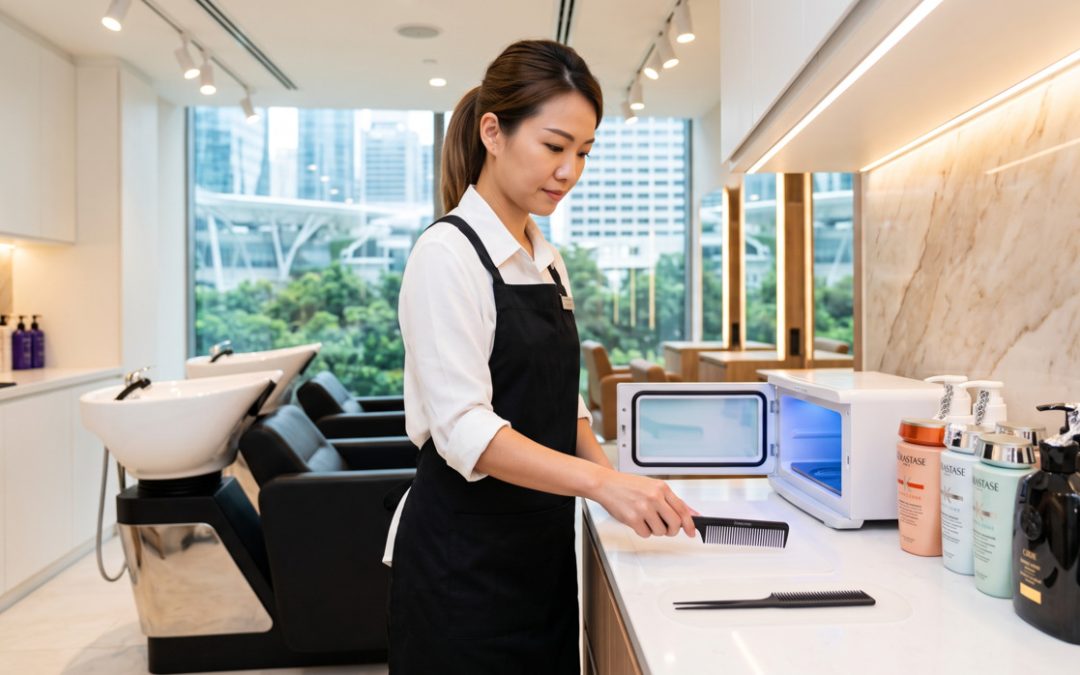
Booking a salon visit is an investment in your self-care, confidence, and personal style. However, many clients overlook the crucial operational factor that sits directly between a stunning transformation and a severe skin infection: salon hygiene. In high-turnover salons, rushed stylists often skip tool sterilization, reuse damp towels, or mix chemical products in contaminated bowls. In a tropical climate like Singapore, heat and humidity create an ideal breeding ground for bacteria, fungi, and scalp folliculitis. Choosing a premium hairdressing salon singapore means ensuring that medical-grade sanitation protocols are non-negotiable. Here are the major red flags you must watch for before sitting in the chair, and how our strict cleanliness standards guarantee your safety.
1. Unsterilized Tools & Shared Brushes: The Folliculitis Hazard
The Feature: Using hairbrushes, shears, or sectioning clips covered in someone else’s hair, dandruff, or product residue is a massive health risk. Unwashed tools easily transmit fungal ringworm and bacterial hair follicle infections.
- Service Breakdown: A trustworthy hair salon singapore never uses unwashed combs or scissors between clients. At SalonPlus, every single tool undergoes a rigorous three-step decontamination protocol: physical debris removal, immersion in hospital-grade disinfectant solution, and storage in a medical UV-C sterilization cabinet. When you sit in our chair, every tool used on your scalp is freshly unpacked from a sanitized pouch.
- Styling Trick: Keep an eye out when you sit down. If a stylist grabs a comb directly from a tray overflowing with hair from a previous client, politely ask for a fresh, disinfected tool before they touch your scalp.
- Tip for styling in SG weather: High ambient humidity and scalp sweat weaken the skin’s natural protective lipid shield. If a dirty comb causes micro-scratches on an already sweaty scalp, bacteria can enter instantly, leading to painful acne-like bumps along your hairline.
- What to Expect from Maintenance: Clean tools ensure that your scalp stays free from bacterial flare-ups, allowing your hair follicles to remain healthy and uninflamed for your routine maintenance trims every 4 to 6 weeks.
2. Stained Wash Basins & Reused Towels: Cross-Contamination Risks
The Feature: The shampoo bowl is where your skin comes into direct physical contact with salon surfaces. Damp towels and slimy neck rests are hotbeds for mold, mildew, and skin-to-skin cross-contamination.
- Service Breakdown: Washing your hair should be a relaxing experience, not a sanitation gamble. Premium salons sanitize their shampoo basins and neck rests with antibacterial wipes after every single client rinse. Furthermore, towels should always be single-use, commercially laundered at high temperatures, and stored in closed, dust-free cabinets. If a basin smells musty or shows chemical staining from previous dye jobs, it is a major operational red flag.
- Styling Trick: Feel the towel offered to you. It should be bone-dry, crisp, and completely odorless. If a towel feels damp or has a sour scent, it has been reused or stored improperly, exposing your skin to mold spores.
- Tip for styling in SG weather: Trapping a damp, contaminated towel around a warm, sweaty neck in tropical heat accelerates fungal growth. Ensuring your salon uses crisp, sanitized linens protects your neck and hairline from contact dermatitis.
- What to Expect for Maintenance: Visiting a salon that respects environmental hygiene ensures your scalp barrier remains calm and unbothered, making your monthly hair makeover singapore or glossing treatment feel genuinely pampering.
3. Unlabeled Bottles & Unhygienic Chemical Mixing
The Feature: Mixing hair dyes, lighteners, or perming solutions in dirty bowls or using mystery chemical mixtures from unlabeled bottles can cause severe scalp burns and allergic contact dermatitis.
- Service Breakdown: Professional chemical transformations require total chemical precision. A top-tier salon mixes all hair dyes and lighteners at a dedicated, spotless color bar directly in view of the client or in a pristine dispensary. All bowls and brushes are washed with hot water and anti-residue soap immediately after use. Furthermore, all treatments—whether a Keratin smoothing product or a scalp treatment orchard therapy—are dispensed from original, clearly labeled professional bottles rather than mysterious, unhygienic tub containers.
- Styling Trick: Don’t be afraid to ask your stylist what products they are mixing for your hair. A professional stylist will happily explain the brand, developer strength, and protective bond-builders being used.
- Tip for styling in Singapore’s climate: Expired or improperly stored chemical mixtures break down faster in warm environments, releasing volatile fumes and causing intense scalp stinging. Sealed, premium formulations ensure predictable color results and zero skin irritation.
- What to Expect for Maintenance: High-grade, hygienically prepared products maintain the structural integrity of your hair shaft, ensuring your color stays vibrant and your scalp remains healthy between salon visits.
Ready for an Uncompromising, Ultra-Clean Salon Experience?
Your health, safety, and peace of mind should never be compromised for a beauty service. By holding salons to uncompromising hygiene standards, you protect your scalp health and ensure a truly luxurious experience every time.
Are you ready to enjoy a high-end makeover where cleanliness is guaranteed? Book your appointment at SalonPlus today. Experience hospital-grade tool sanitation, pristine facilities, and expert care in an environment designed entirely for your safety and comfort.
References
[1] American Academy of Dermatology Association (AAD). (2026). Tips for healthy hair. (Clinical guidelines detailing the importance of clean tools and scalp hygiene to prevent bacterial and fungal folliculitis).
[2] Wikipedia. (2026). Barber. (General reference detailing historical and modern sanitation protocols, disinfectant solutions, and tool sterilizing standards in hair salons).
[3] National Environment Agency (NEA), Singapore. (2026). Climate of Singapore. (Meteorological data detailing the high ambient heat and humidity that accelerate bacterial growth on unwashed salon tools and wet basins).
[4] International Journal of Trichology. (2026). Hair Cosmetics: An Overview. (Scientific literature explaining the risks of unhygienic product mixing, cross-contamination, and scalp contact dermatitis).