


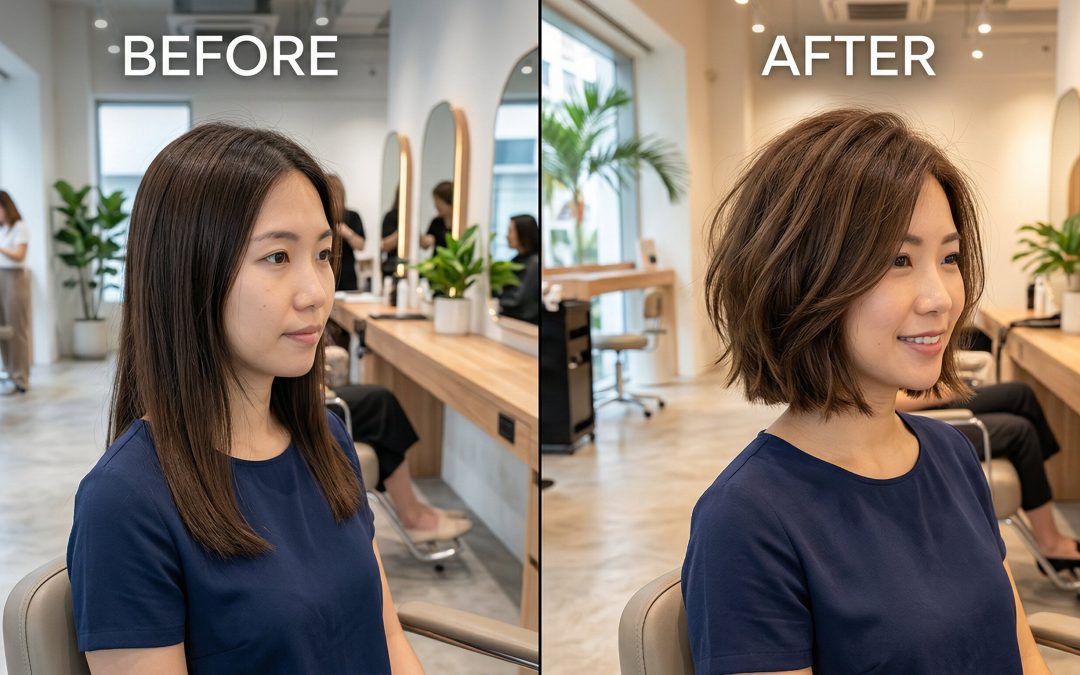
Living with fine, flat hair in Singapore often feels like a daily battle against the elements. The moment you step outside, the tropical humidity can instantly deflate your carefully styled roots, leaving your hair clinging to your scalp [1]. But achieving lasting volume isn’t about using a mountain of stiff hairspray; it starts with the architecture of your cut. This guide explores the strategic, gravity-defying techniques used by a top hairstylist orchard to build internal structure and bounce. From clever weight removal to invisible layers, we’ll show you how the right precision cut can transform fine strands into a full-bodied masterpiece that actually survives the heat.
1. The Internal Structured Blunt Bob with Micro-Layers
The Change: This combination gives the client with long, fine hair who wants a big change a lot of style and the illusion of maximum density.
Service Breakdown:
- Cut: A precision, strong blunt bob was carved at jaw-length. Unlike a traditional blunt cut which can lay flat, this “internal structure” technique uses point cutting only on the hidden bottom sections to create lift and internal movement [4]. This adds volume without sacrificing the visual weight of the blunt edge that makes fine hair look thicker.
- Styling Trick: The secret to fighting the humidity is a two-step approach: apply a root-lifting spray to damp hair, then a small amount of lightweight volumising mousse to the mid-lengths.
Tip for styling in Singapore’s weather: When seeking a professional style haircut, always ask your stylist about weight removal. This technique uses a precise blow-dry with a ceramic round brush, focusing on lifting the roots straight up. The internal structure means that even when the humidity hits, the hair has built-in ‘pockets’ of air preventing that dreaded flat look.
What to Expect from Maintenance: To keep the bob’s sharp, thick-looking shape, it needs to be trimmed every 7 to 9 weeks. Proper conditioning of the ends is required to prevent breakage on fine strands [3].
2. The Invisible Layered Lob with Face-Framing ‘Gussets’
The Change: This is great for giving fine, limp long hair life, depth, and the appearance of thickness without sacrificing significant length.
Service Breakdown:
- Cut: Long, ‘invisible layers’ were added. These are internal layers cut vertically underneath the top section, which remains one length. A critical addition is face-framing “gussets”—small, graduated sections starting below the chin—which create a voluminous frame [4].
- Styling Trick: This style works best with soft, multi-tonal highlights, which add sophisticated shine and visual depth.
Tip for styling in SG weather: Before your appointment with an expert hairdresser far east plaza, request a humidity-resistant smoothing treatment. For daily styling, use a large-barrel curling iron to create loose waves, focusing only on the layered and gusset sections to bring out the color dimension.
Maintenance Expectation: You need to reshape the invisible layers and face frame every 10 to 12 weeks to keep the structure intact.
3. The Textured Pixie with ‘Crown Lift’
The Transformation: A strong, confident look that mixes architectural cutting with techniques designed specifically for height and airy texture.
Service Breakdown:
- Cut: A textured, layered pixie where the longest sections are concentrated at the crown. The sides and back are cut precisely close, which immediately makes the top sections appear fuller and longer [4].
- Styling Trick: A cool platinum or dramatic color change brings out every angle and layer of the precision cut, visually multiplying the appearance of individual strands.
Tip for Styling in SG Climate: Your professional hairstylist orchard will demonstrate how to work a minimal amount of volumising paste or light matte pomade upwards through the crown of dry hair. This short style is the ultimate humidity hack: it dries quickly and doesn’t have enough weight to get frizzy [1].
What You Should Expect for Maintenance: To keep the pixie’s shape sharp and the crown volume optimal, you need to trim it every 4 to 5 weeks.
4. The Modern ‘Ghost Layer’ Cut
The Transformation: A sophisticated, versatile cut that uses a specialized layering technique to generate consistent volume throughout fine hair.
Service Breakdown:
- Cut: The ‘ghost layer’ technique involves creating very slight, subtle layers within the perimeter of a one-length base, typically a lob or shoulder-length cut. These layers are “ghosts” because they are nearly invisible when the hair is still, but provide a powerful scaffolding when styled.
- Styling Trick: Combining this cut with a ‘money piece’ highlights accentuates the movement of these hidden layers.
Tip for styling in Singapore’s climate: After getting a precision haircut far east plaza, use a lightweight smoothing serum or dynamic heat-protectant spray to protect ends from frizz without weighing down your fine hair type [2]. A gentle, upward ‘scrunch’ with a diffuser can activate the ghost layers for effortless, lasting body.
What to Expect for Maintenance: To keep the perimeter and the ghost layers functioning correctly, a trim is needed every 9 to 11 weeks.
Want to See Your Own Change?
This portfolio shows how effective a coordinated volumising plan can be. Before each result, there is a long consultation to learn about your hair type, lifestyle, and style goals.
Are you ready to work together creatively to defeat flat hair in the humidity? Make an appointment with one of our skilled colorists and stylists at SalonPlus. We’ll talk about the cut, volumising strategy, color, and care plan that will make your perfect “hair transformation in Singapore” a reality.
References
[1] National Environment Agency (NEA), Singapore. (2024). Climate of Singapore (Source regarding Singapore’s temperature and humidity metrics).
[2] Healthline. (2023). Hair Types: How to Identify and Care for Yours (Source regarding the structural behavior and care requirements of fine/thin hair).
[3] American Academy of Dermatology Association (AAD). (2024). Tips for Healthy Hair (Clinical source on preventing breakage and maintaining healthy hair integrity during styling).
[4] Wikipedia. (2024). Hairstyle – Layering and Cutting (General reference for traditional structural cutting techniques like bobs, pixies, and layering).