


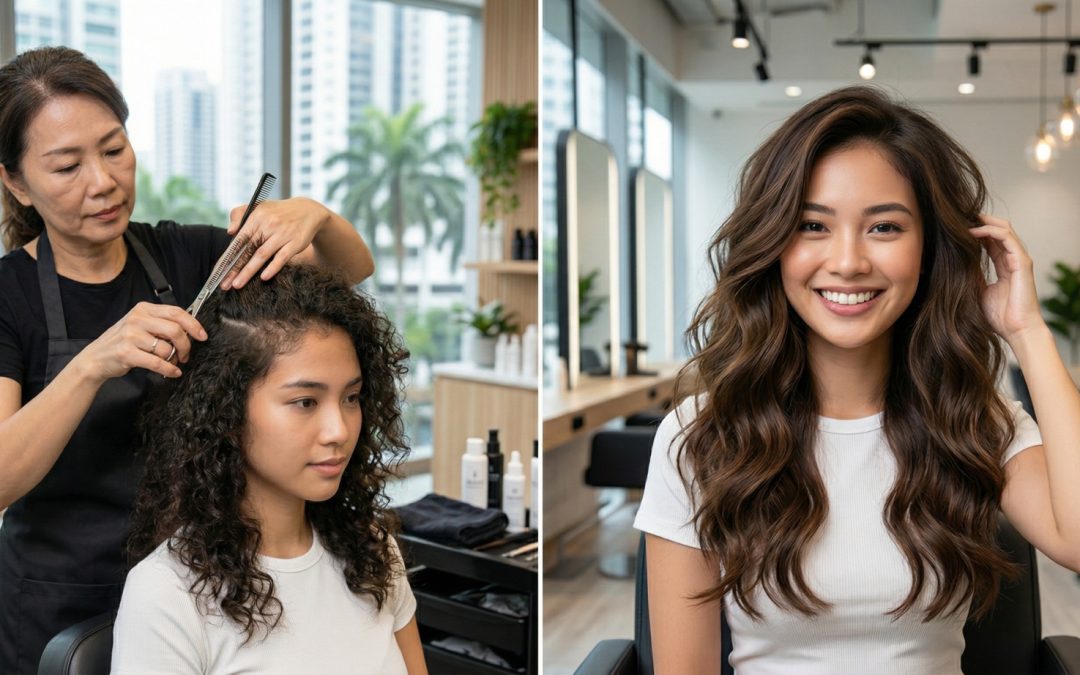
Deciding to return to your natural hair texture after years of chemical straightening is incredibly liberating—until you hit the dreaded awkward phase. Having a puffy, wavy halo of natural regrowth clashing against pin-straight, rebonded ends is a massive pain point for many Asian clients. It can feel unmanageable, but you do not have to hide under a hat for a year. With the right strategy and a trusted hairdressing salon singapore, you can bridge the gap between these two dramatically different textures. Whether you opt for a clever cut, a texturising wave, or smoothing treatments, there is a survival guide to make this transition seamless and stylish.
1. The Strategic Transitional Haircut
The Transformation: The most straightforward way to eliminate the dual-texture dilemma is to gradually cut the rebonded ends away. However, if you aren’t ready for a drastic “Big Chop,” strategic layering is your best friend.
- Service Breakdown: Rather than a blunt cut, which highlights the difference between puffy roots and flat ends, the stylist uses texturising shears and point-cutting techniques. By adding internal layers and removing weight from the transition line, the straight ends begin to mimic the movement of the natural roots, diffusing the harsh line of demarcation.
- Styling Trick: Use a medium-barrel round brush when blow-drying. Focus on beveling the straight ends inwards or outwards to give them artificial movement that blends with your natural root volume.
- Tip for styling in SG weather: Humidity will naturally encourage your roots to expand while the rebonded ends remain stubbornly flat [3]. Use a lightweight volumizing mousse at the mid-lengths to ends to encourage fullness, keeping the silhouette balanced even on the sweatiest days.
- What to Expect from Maintenance: To keep the shape looking intentional rather than unkempt, you will need frequent micro-trims every 6 to 8 weeks to slowly eliminate the treated hair and prevent split ends from traveling up the hair shaft [1].
2. The Texturising Blending Perm
The Transformation: If your natural roots are wavy or curly, your straight ends will always look out of place. The solution? Add texture back into the rebonded ends so they match your natural regrowth.
- Service Breakdown: As a premier perm salon singapore, we utilize gentle, specialized perm lotions designed specifically for previously processed hair. The stylist will wrap the permanently straightened ends in rollers to create a soft wave or curl that mirrors your natural root texture, effectively hiding the transition zone [4].
- Styling Trick: Ditch the brush. Apply a hydrating curl cream to damp hair and scrunch upwards from the ends to encourage the new wave pattern to lock in with your natural root texture.
- Tip for styling in SG weather: Permed and naturally textured hair thrives on moisture, and Singapore’s air conditioning can be surprisingly drying. Seal your cuticles with a few drops of argan oil to prevent your newly unified texture from expanding into a frizz cloud.
- What to Expect for Maintenance: A digital or cold perm on the ends will typically hold its shape for 4 to 6 months, allowing your natural hair plenty of time to grow out before you need another touch-up or trim.
3. The Smoothing “Middle Ground” Strategy
The Transformation: If you aren’t ready to embrace your full natural curl but want to stop permanent rebonding, you need a treatment that softens the contrast. This method tames the puffy natural roots without breaking the hair bonds permanently.
- Service Breakdown: A premium anti frizz hair treatment (such as a keratin or protein smoothing treatment) is applied primarily to the new growth. Unlike rebonding, which alters the internal structure of the hair permanently [2], this treatment coats the cuticle [4]. It relaxes the natural root just enough to blend smoothly into the straight ends without making it totally flat.
- Styling Trick: Because the treatment adds immense shine and slip, simply rough-drying your hair with your fingers and pointing the hairdryer nozzle downwards is enough to achieve a sleek, unified look.
- Tip for styling in Singapore’s climate: This treatment is essentially a humidity-blocker. It creates a hydrophobic (water-repellent) shield around the hair shaft, meaning your natural roots won’t swell up the second you step out into the tropical heat [3].
- What to Expect for Maintenance: Smoothing treatments gently wash out over time. You will need to return to the salon every 2 to 4 months to reapply the gloss and maintain the smooth transition.
Ready to Reclaim Your Natural Texture?
Growing out rebonded hair requires a bit of patience, but it shouldn’t require suffering through bad hair days. The key is choosing a blending method that aligns with your ultimate hair goals and your daily styling threshold.
Are you ready to transition with confidence? Book a consultation with a top hairstylist far east plaza at SalonPlus. We will assess your natural curl pattern, the condition of your rebonded ends, and map out a customized survival guide to get your hair back to its beautiful, natural state.
References
[1] American Academy of Dermatology Association (AAD). (2024). How to stop damaging your hair. (Clinical guidelines on managing chemically processed hair and preventing breakage during transition phases).
[2] Wikipedia. (2024). Hair straightening. (General reference outlining the chemical breakdown of hair bonds during rebonding versus temporary smoothing treatments).
[3] National Environment Agency (NEA), Singapore. (2024). Climate of Singapore. (Meteorological data detailing the high ambient humidity that exacerbates the contrast in dual-textured hair).
[4] International Journal of Trichology. (2024). Hair Cosmetics: An Overview. (Scientific source explaining the mechanism of texturising perms and anti-frizz coatings on the hair cuticle).